
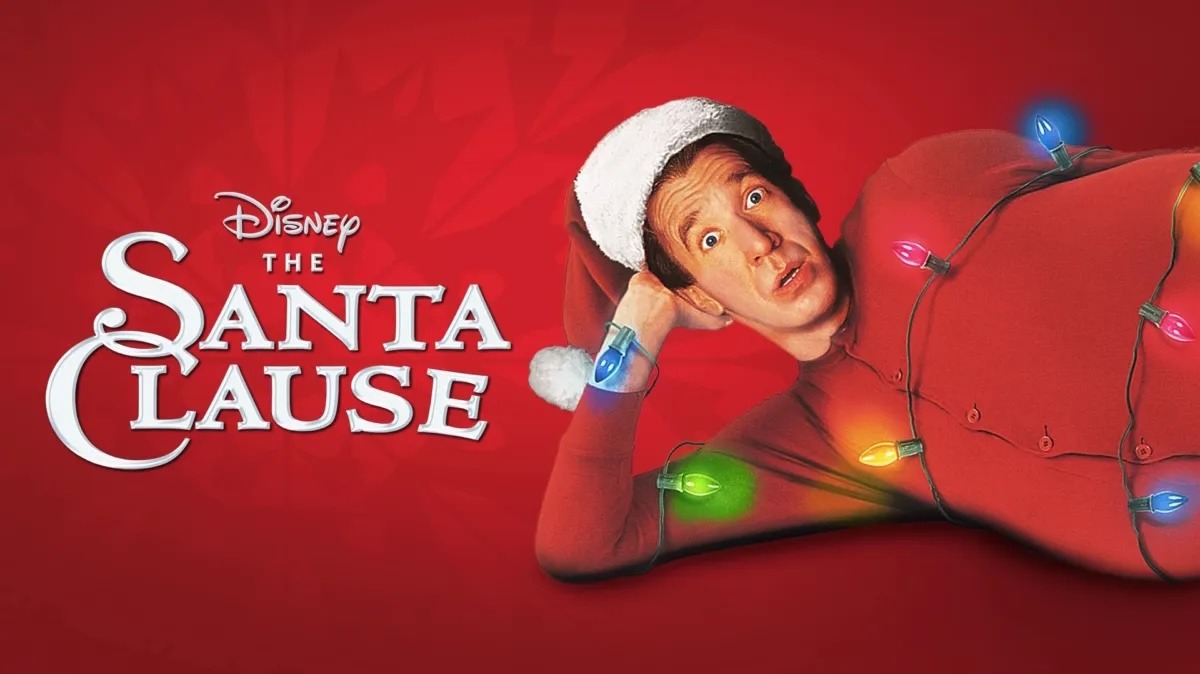
Last week, one of the authors of this blog was watching The Santa Clause – a hit Christmas film from 1994 in which Tim Allen plays a businessman who becomes Father Christmas due to the operation of the ‘Santa Clause’ contained within a magical contract. WhatsApp exchanges with colleagues incited the remaining authors of this blog to also watch the film, and what ensued was an extensive exchange identifying the relevant legal issues arising from the film (spoiler alert: there’s a lot!)
This blog discusses just a few of those issues.
Occupiers’ liability
The legal issues all begin when Santa falls off the roof of the home of businessman Scott Calvin (Tim Allen). Santa’s tumble to his demise from Scott’s roof provides an unexpectedly useful illustration of occupiers’ liability, if we ignore the fact that Mr Calvin’s home is based in the fictional town of Lakeside, Illinois. Under section 2(2) Occupiers’ Liability Act 1957, Scott, as the occupier of the premises, owes lawful visitors a duty to take such care as is reasonable in all the circumstances to see that they will be reasonably safe in using the premises for the purpose for which they are invited or permitted to be there. If Santa is treated as a lawful visitor, entering under a long-standing implied licence linked to his annual gift-delivery rounds, Scott could, in principle, be responsible for ensuring the roof did not present an unreasonable hazard. A snow-covered, slippery pitch may raise an eyebrow, although Santa, with centuries of rooftop experience, might be expected to appreciate and guard against risks ordinarily incidental to the exercise of his present-distribution calling. If anyone is equipped to anticipate the hazards of icy, sloping rooftops, it is surely a seasoned professional who spends one night each year hopping across them with magical reindeer. On this basis, Santa’s unfortunate slip looks less like a breach of duty and more like a festive workplace mishap.
If, however, Santa is not slotted into the 1957 Act’s category of ‘lawful visitor,’ the analysis falls under the Occupiers’ Liability Act 1984, which concerns the more limited duty owed to people who are on the premises without permission. The 1984 Act does not impose a general obligation to make your property safe for every uninvited midnight entrant in red. A duty only arises if the statutory gateway in section 1(3) is satisfied. In broad terms, Scott must
- know of the danger or have reasonable grounds to believe it exists, for example, a treacherously icy roof edge,
- know or have reasonable grounds to believe that someone might come into the vicinity of that danger, and
- the risk must be one against which, in all the circumstances, he may reasonably be expected to offer some protection.
Scott might well appreciate, in the abstract, that roofs are not designed as pedestrian walkways. The harder question is whether he has any reasonable basis to anticipate that anyone, Santa included, will be up there at all. Although clearly jaded about Christmas as a toy company executive, Scott is adamant about the existence of Santa, and on Christmas Eve he can hardly claim the possibility of a nocturnal roof-top visit is wholly beyond contemplation. In that spirit, section 1(3)(b) Occupiers’ Liability Act 1984 is at least arguable, because he has reasonable grounds to believe that ‘the other’ (Santa) may come into the vicinity of the obvious roof-edge danger on precisely the one night of the year when the legend is said to do his rounds.
That reasonableness point under section 1(3)(c) is where a 1984 Act claim would most likely fall off the roof. Even allowing for seasonal traditions, the Act is not really asking householders to ‘Santa-proof’ their homes with candy-cane guardrails, warning signage or a pre-emptive de-icing programme just in case. And even if a duty did arise, it is only one of reasonable care in the circumstances; it does not turn an obvious, inherent risk, falling from a roof, into the occupier’s problem to solve. Once Santa chooses to run his Christmas Eve operation from a snowy, sloping roof in the dead of night, the law is likely to see the main danger as one that comes with the territory, an occupational hazard of the ‘deliver presents via rooftop’ business.
The Santa Clause
Following Santa’s fall from the roof, Scott picks up a card from Santa’s pocket which reads:
If something should happen to me, put on my suit. The reindeer will know what to do.
What Scott doesn’t realise is that the card contains some small print which is the key to the film’s plot.
The law of contract in Illinois is remarkably similar to that of England and Wales, requiring the same basic elements:
- offer;
- acceptance;
- consideration;
- intention to create legal relations.
The card can be characterised as a unilateral offer, promising that whoever puts on the suit becomes Santa Claus in return for performance of specified conditions. English law recognises such offers can be accepted by conduct rather than communication. Scott’s act of donning the suit could therefore amount to acceptance by performance.
Consideration means that each party must provide something of value in exchange for the other’s promise, even if that value is minimal or wholly inadequate. Consideration would be satisfied by Scott undertaking the burdensome role of Santa Claus, receiving with it a free house at the North Pole, magical powers, etc; while the offeror receives the benefit of continuity of service.
The more difficult issue is intention: in a domestic or social setting, there is a presumption against the intention to create legal relations, whereas in a commercial setting there is a strong presumption in favour. This situation, however, is neither. On one hand, Scott’s encounter with the Santa card occurs in a highly informal, non-commercial setting, which might suggest a lack of intention. On the other, formality and seriousness of language can create a presumption in favour of intent.
A further issue is whether Scott genuinely consented to be bound, particularly given the fantastical context. English law adopts an objective approach to agreement: what would a reasonable person would infer from his conduct? By putting on the suit after reading the card, Scott objectively manifested consent, even if he underestimated the consequences. The fact that the arrangement appears extraordinary does not of itself negate contractual force; parties are generally bound by what they agree, not by what they later wish they had agreed. Absent misrepresentation as to the nature of the document itself, English law is reluctant to relieve a party simply because the bargain was ill-advised.

As in so many contractual disputes, the most important clauses are contained in the small print.
The most contestable aspect is the very small print which purportedly imposed extensive and onerous obligations that Scott did not notice. Upon visiting Santa’s workshop at the North Pole, an examination under a powerful magnifying glass reveals the below clause (geddit?) in very small print:
ln putting on this suit and entering the sleigh the wearer waives any and all rights to any previous identity, real or implied, and fully accepts the duties and responsibilities of Santa Claus in perpetuity until such time that wearer becomes unable to do so by either accident or design.
Under English law, contractual terms must be properly incorporated. Where terms are contained in a document, reasonable notice must be given before or at the time of contracting. Moreover, particularly onerous or unusual terms require a higher degree of notice. It is arguable that the life-altering obligations hidden in microscopic print are ‘onerous and unusual,’ and the Santa Clause system would need to show it took reasonable steps to draw them to Scott’s attention. Accordingly, while a contract may have come into existence, a strong argument exists under English law that the most onerous small-print obligations were not validly incorporated and therefore not binding.
Has Santa been enslaved?
Of course, regardless of the contractual validity of the Santa Clause, the very essence of the agreement would run afoul of one of the oldest prohibitions found in human rights law – the prohibition of slavery. Binding Scott to a life in the role of Jolly Old St. Nick, against his will and apparently without pay, would clearly amount to indentured servitude.
Additionally, his new status brings with it a loss of control over his bodily autonomy, forcing him to gain significant amounts of weight, turning his hair white and accompanying it with a large white beard that no amount of shaving can rid him of. All of these factor into his servitude and are prohibited under key treaties of international law such as the International Covenant on Civil and Political Rights 1966 and the Slavery Convention 1926 and its Supplementary Convention of 1956. Considering also that his initial reduction to slavery took place within the US, national law would certainly apply. There, the US Constitution’s thirteenth amendment prohibits slavery and involuntary servitude, protecting Scott’s right to reject the imposition of the red suit and beard. Let’s not even get started on the elves, though perhaps they at least get paid.
Finally, his unwitting sleigh ride from his home country to the North Pole would breach the linked prohibition of acts amounting to and related to the slave trade, with the reindeer taking on the role of both captors and mode of transportation. At the very least, that is clearly a kidnapping.
Conclusion
In watching the film, we identified numerous other legal issues. For example:
- When Scott descends the chimney he is hit on the head with his sack, raising issues under the Health and Safety at Work etc. Act 1974.
- Santa’s list raises serious concerns under the General Data Protection Regulation and the Data Protection Act 2018, and potentially even the Regulation of Investigatory Powers Act 2000.
- Jurisdiction over the North Pole under the United Nations Convention on the Law of the Sea is a contentious legal issue.
Why not watch the film this Christmas and see how many legal issues you can spot?
On behalf of all of the staff at Coventry Law School, we wish all readers a warm and joyful season. Merry Christmas to those who celebrate, Happy Hanukkah to those observing, and best wishes to everyone for a peaceful and happy New Year.



Leave a Reply