
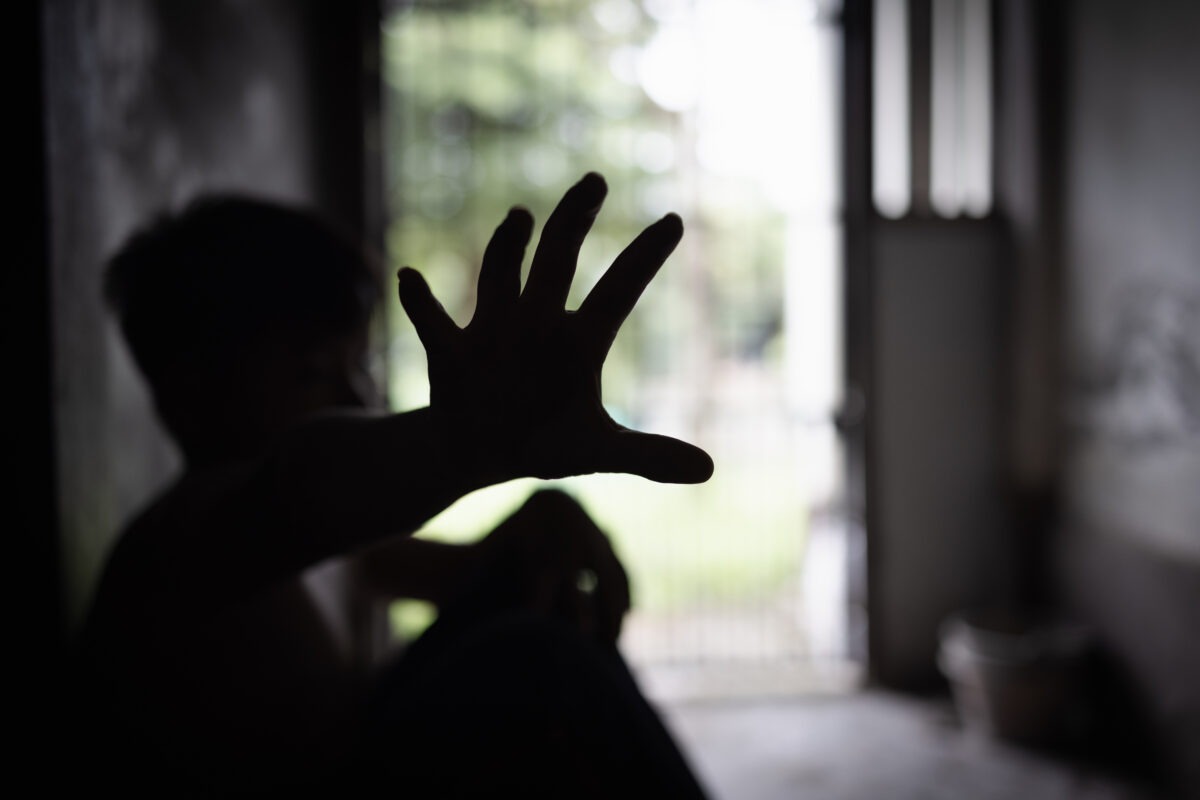
Domestic work is one of the oldest and socially acceptable form of informal labour for women and the girl child in the informal labour sector. While no consolidated official statistics are available, the International Labour Organization (ILO) estimated that there were at least 8.5 million domestic workers in Pakistan.[1]The number is likely much higher, considering the difficulty of accounting for informal labour in the private sphere. Pakistan is one of those countries where child domestic labour remains one of the most persistent and overlooked social challenges. In urban households across the country, children—many of them girls—form a significant portion of the domestic workforce. Recent estimates suggest that around 264,000 children are employed as domestic workers in Pakistan.[2] These children face unsafe working conditions, long hours, absence of rest days, and a broad range of responsibilities—from cleaning and laundry to childcare—often without adequate compensation. For girls in particular, the risks are even greater, as they are more vulnerable to physical, emotional, and sometimes sexual abuse.[3]
While public awareness has grown in recent years, child domestic labour remains deeply rooted in poverty and social acceptance. Families facing economic challenges often rely on the income generated by their children, even when wages are minimal or symbolic. Employers, in turn, often prefer hiring young girls because they are easier to control, less likely to resist, and can be exploited for extremely low—or sometimes no—wages. In some cases, children are trapped in bonded labour when employers offer advance payments to their parents, creating a cycle of dependency and exploitation. These children rarely enter domestic service by choice. Their labour is a consequence of economic hardship, limited opportunities, and social norms that prioritize survival over education and childhood.
Children who migrate from rural areas to urban centres for live‑in domestic work face additional layers of isolation. Removed from their families and communities, they lose access to emotional support, education, and social development. Their labour, while essential to the functioning of employing households, comes at the cost of their own childhood and well‑being. Ultimately, child domestic labour strips children of their most fundamental right: the right to a childhood. It deprives them of education, play, safety, and the chance to grow in a nurturing environment.
Patriarchal norms further reinforce the gendered division of labour. In Pakistan, women and girls are traditionally confined to the private sphere, and domestic work is viewed as an extension of their expected household roles. This public–private divide contributes to the devaluation of domestic labour and the marginalization of those who perform it.
Although Pakistan has ratified the UN Convention on the Rights of the Child and it has also ratified the ILO Convention 138 and 182.[4] The ILO Recommendation 190 supplements the Convention 182. The Recommendation 190 clearly states that ‘work of a child which exposes him/her to physical, psychological or sexual abuse or work under particularly difficult circumstances such as work for long hours or during the night or where the child is unreasonably confined to the premises of the employer will be considered worst forms of child labour’. The UNCRC and the ILO Convention 189 has certainly influenced the child related legislative provisions in Pakistan, yet references to core principles of best interest of the child, equality, and non-discrimination are superficial and sound more of a rhetoric that has not been translated into practice. The failure of effective implementation of the legislative and policy measure pose a challenge to the realisation of children’s rights in Pakistan. Moreover, Pakistan has still not ratified ILO Convention on Domestic Workers 189 and Recommendation 190.
From Constitutional Guarantees to Legal Gaps: The Evolving Legal Landscape of Child Domestic Labour in Pakistan
The 1973 Constitution of the Islamic Republic of Pakistan acknowledges in its Principles of Policy the protection of marriage, family, mothers, and children. Article 11 of the Constitution prohibits slavery, bonded labour and child labour. Article 11(3) expressly prohibits the employment of children below the age of fourteen years in any factory, mine or other hazardous employment. Child domestic labour does come under Article 11 and the ILO’s definition of the worst forms of child labour therefore it becomes obligatory on Pakistan to fulfil its obligations under the ratified Conventions as well as pursue its Constitutional obligations, which guarantee dignity and respect to all citizens.
Under Article 35 of the 1973 Constitution, the State is under an obligation to ‘protect … the mother and the child’. Article 37 of the 1973 Constitution lays down commitments for promoting social justice and eradication of social evils. This includes the State’s obligation ‘to remove illiteracy and provide free and compulsory secondary education within minimum possible period’ and ‘make provision for securing just and humane conditions of work, ensuring that children and women are not employed in vocations unsuited to their age or sex, and for maternity benefits for women in employment’. This constitutional requirement is further strengthened by the inviolability of the privacy of the home, which is a fundamental right under Article 14 of the 1973 Constitution. These provisions support parental guidance through the institution of marriage and strengthening of the family as the primary unit of the social system, within the inviolable right of privacy of the home.
The constitutional guarantee of the inviolability of the privacy of the home, articulated in Article 14, however adds a complex dimension to the issue. While intended to protect family autonomy, this provision inadvertently shields child domestic labour from public scrutiny and regulatory oversight. Because domestic work takes place within private households, it remains largely invisible, making it difficult for state institutions to monitor working conditions or intervene when abuse occurs. As a result, many child domestic workers are excluded from the protections envisioned by the Constitution.
A major shift in the governance of child rights occurred with the 18th Constitutional Amendment in 2010, which devolved significant legislative and administrative authority to the provinces. This amendment granted provincial governments the power to legislate on child rights, including labour regulation, welfare services, and child protection systems. The federal government now retains jurisdiction only over federal territories and areas outside provincial boundaries. This decentralization triggered a second wave of legislative reform, with provinces drafting and enacting new laws aimed at addressing child protection, hazardous labour, trafficking, welfare institutions, and juvenile justice. While these reforms represent meaningful progress, their effectiveness depends heavily on implementation capacity, inter‑provincial coordination, and sustained political commitment.
Recent legislative developments in Pakistan reflect a gradual but uneven effort to regulate domestic work and extend legal protections to domestic workers. The first federal attempt to formalize domestic labour regulation emerged in 2013 with the Domestic Workers (Employment Rights) Bill, which sought to bring domestic workers within the ambit of labour laws but ultimately lapsed. A substantive step occurred with the enactment of the Islamabad Capital Territory Domestic Workers Act, 2022, which provides domestic workers with rights comparable to those in the formal sector, including access to social security, health services, and welfare benefits. The Act prohibits the employment of children under sixteen in domestic work; however, its jurisdiction is limited to the federal capital and does not extend to the provinces.
Provincial progress has been inconsistent. Khyber Pakhtunkhwa and Balochistan have yet to enact specific legislation for domestic workers, and existing minimum wage laws in Khyber Pakhtunkhwa and Sindh do not include domestic workers within their scope. Furthermore, workplace harassment legislation excludes domestic workers, a position reinforced by judicial interpretation in Meera Shafi Vs Office of the Governor Punjab, the Lahore High Court, held that self‑employed or independent domestic workers fall outside the statutory definition of workplace harassment.[5]
Sindh introduced domestic worker legislation in 2018, followed by Punjab’s Domestic Workers Act 2019 (hereinafter referred as PDWA) 2019, which remains the most comprehensive provincial framework to date. The PDWA defines domestic work broadly, prohibits forced labour, bans discriminatory practices, and guarantees rights such as weekly rest, written employment contracts, regulated working hours, and access to social security benefits. It also prohibits the use of the term “servant” and requires employers to register employment contracts with labour inspectors. Despite these advances, the Act sets the minimum working age at fifteen—below international standards—and permits children aged fifteen to eighteen to perform “light work,” a term left undefined. The PDWA does not give any powers to survey and inspect private households for the purposes of inspection of the workplace and registration of domestic workers. In the absence of inspection provision domestic workers, the practice of employing underage girls continues unabated.[6] The absence of clear criteria for safe working conditions and the lack of enforcement mechanisms, particularly the inability to inspect private households, leave child domestic workers vulnerable to exploitation.
Implementation challenges further undermine the effectiveness of existing legislation. The registration of domestic workers as a ‘worker’ under the law is still very slow and domestic workers and employers are not aware of the legislation therefore an extensive awareness raising campaign should be launched through media and with the support of trade unions, and civil society organisations for registering domestic workers. According to a recent survey in 2019 majority of domestic workers remain unaware of the registration process or the rights provided under the Act. Reportedly, only 12,500 domestic workers had registered with Punjab Employees Social Security Institution. Key institutions such as Dispute Resolution Committees are not yet established. These gaps underscore that child domestic labour cannot be understood in isolation; it is embedded within broader socio‑economic, cultural, and institutional dynamics.
Pakistan’s constitutional and post‑devolution landscape offers a rich field for inquiry. The gap between constitutional guarantees and enforcement raises important questions about governance, institutional capacity, and social norms. The invisibility of domestic labour within private households highlights the need for interdisciplinary research that draws from law, sociology, gender studies, and human rights. Moreover, the gendered nature of child domestic labour, the structural forces that perpetuate it, and the challenges of regulating informal labour markets all demand deeper scholarly engagement. Addressing these challenges requires coordinated legislative reform, strengthened enforcement, and sustained awareness‑raising efforts at both policy and community levels.
[1] Pakistan is the fifth most populous country in the world with a population of 211.17 million (51 per cent male, 49 per cent female) with nearly half of the population under the age of 18 and a growth rate of 1.94. Available at https://southasianvoices.org/safeguarding-pakistans-domestic-workers-will-take-more-than-just-laws/ accessed on 27/01/2026.
[2] Source: Government of Pakistan, Census 2017, Government of Pakistan, Islamabad, 2017.
[3] A joint report by three rights-based groups – the Hari Welfare Association (HWA), the Pakistan Institute of Labour Education and Research (PILER), and the Institute for Social Justice (ISJ) revealed that more than 140 cases of abuse, torture, rape and murder of child domestic workers were reported during the past ten years.
[4] Article 2 of the ILO Convention 138, states that the minimum age for admission to employment ‘shall not be less than the age of completion of compulsory schooling and, in any case, shall not be less than 15 years.’
An exception to the minimum age of fifteen is made only for a state ‘whose economy and educational facilities are insufficiently developed,’ which may ‘initially specify a minimum age of 14 years. ILO Convention 182 defines the worst forms of child labour as; ‘All types of slavery, including the sale and trafficking of children; forced labour to pay off a debt; any other type of forced labour, including using children in war and armed conflict; all activities which sexually exploit children, such as prostitution, pornography or pornographic performances; any involvement in illegal activities, especially the production or trafficking of drugs; any work which could damage the health, safety or well-being of children’.
[5] [2020], PLD 54 Lahore.
[6] Shahid A (2023) Child Domestic Workers in Pakistan: Challenges, Legislative Interventions, and Finding a Way Forward, Asian Yearbook of Human Rights and Humanitarian Law, Brill-Nijhoff publication p204
Leave a Reply