

In Vanik and others (Decision of the European Court, 4 November 2025; Applications nos. 17982/21 and 3 others), the European Court of Human Rights upheld prisoners’ claims that the total smoking ban imposed in Estonian prisons was a disproportionate interreference with their rights under Article 8 of the European Convention – the right to private life. Before delivering judgment, the European Court noted that it had already ruled on cases concerning smoking in prisons from the opposite angle (passive smoking), but that this was the first time it had had to assess the impact of a total ban on smoking in prisons from the point of view of prisoners with a long-term smoking habit.
The decision impacts on prisoners’ rights generally, but has a particular relevance to those European states, including the United Kingdom, who have imposed a ban on smoking.
The facts and decision in Vainak
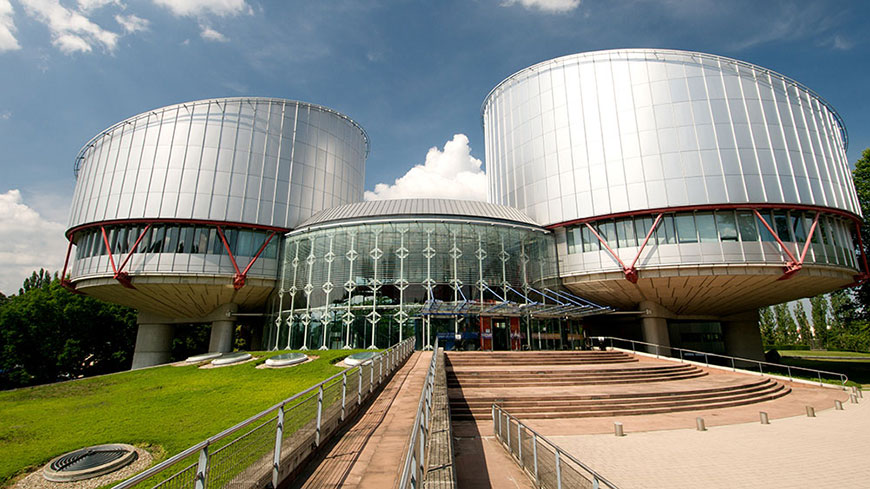
The European Court of Justice building at Strasbourg.
The applicants are all long-term smokers and were prisoners at the time the smoking ban entered into force in Estonia in 2017. The applicants challenged the ban in the domestic courts, but in 2019 the Supreme Court of Estonia declared that the ban was constitutional, finding that it was necessary for the protection of non-smokers’ health and prison security. The Supreme Court also considered that less restrictive means – such as special smoking rooms, separating smokers and non-smokers or allowing smoking only outdoors – would not be as effective as a complete ban, and that treatment and counselling for withdrawal symptoms was provided if a prisoner gave up smoking. The prisoners relied on Article 3 (prohibition of inhuman or degrading treatment) and Article 8 (right to respect for private and family life), complaining in particular about the withdrawal symptoms they had had – including weight gain, sleeping problems, depression and anxiety.
The European Court held that there had been a violation of Article 8 as concerned three of the applicants (one prisoner’s claim was declared inadmissible for failure to use the domestic remedies), but there had been no violation of Article 3 on the facts. The Court relied on the notion of personal autonomy and the possibility to make choices about one’s own life and health, noting that in a context of already limited personal autonomy, the freedom for prisoners to decide – such as whether to smoke – was all the more precious for them. In contrast, it also found that the state, in deciding to bring in the ban, failed to assess the impact on the personal autonomy of prisoners who smoked. Thus, such a far-reaching and absolute ban had not been justified by the limiting provisions under Article 8(2), and had exceeded Estonia’s considerable margin of appreciation.
The Court also declared the claims under Article 3 as inadmissible; although giving up smoking had caused the applicants some stress or anguish, it had not attained the minimum level of severity for Article 3 to come into play. Further, there was no evidence that the prisoners had complained in the domestic courts about the lack of appropriate treatment and counselling provided at the prison.
However, the Court accepted that the choice to smoke and the question of providing treatment to counter withdrawal symptoms came under the scope of Article 8. It then held that the ban had interfered with prisoners’ right to respect for private life, accepting that that interference had intended to protect others from passive smoking. However, it noted that the ban had not benefitted from direct parliamentary review and debate, and that the domestic analysis had focused on health protection, prison security and the possibility of counselling and treatment, thus failing to take into account at all personal autonomy and prisoners’ freedom of choice in matters concerning their own body and health.
Noting that smoking tobacco was still legal for persons at liberty, and that there was no consensus among the member States on the need to ban smoking in prison settings, the Court found that the States’ margin of appreciation to regulate smoking in prisons, while considerable, was not without limits. Thus, such a far-reaching and absolute ban with no assessment of the impact on the personal autonomy of prisoners who smoked had not been justified and exceeded Estonia’s freedom to decide on such matters. Thus there had been a violation of Article 8.
Impact of the case on prisoners’ rights
As seen in this case, the prisoner’s argument was that banning smoking in prisons violated their right to enjoy their private life, and not to be subject to inhuman or degrading treatment caused by withdrawal symptoms (although this part of the claim was rejected by the Court.) On the other hand, smoking bans, or at least the refusal to impose or enforce them, can impact on the health and human rights of other prisoners. Thus, a prisoner’s health might impose a positive duty on the state under Article 2 of the Convention to protect the right to life of prisoners affected by a smoking environment; or – under Article 3 – to ensure that they are not subject to inhuman or degrading treatment caused by passive smoking. Further, a smoking environment in prisons can impact on the non-smoking prisoner’s private life, under Article 8.
The decision in this case raises a number of important issues on prisoners’ claims under the Convention and the role of the Court in reviewing the state’s laws and practices in line with the rights laid down by the Convention. Thus, the Court normally provides each state with a wide margin of appreciation (discretion) in such cases, showing a reluctance to interfere unless the defendant state’s law is clearly out of line with fundamental principles and other states’ practice. Here, however, the Court warns us that that discretion is not unlimited, and that the state must at least take into account the inherent rights and liberty of prisoners. This approach is similar to the one taken by the Strasbourg Court with respect to prisoner voting rights (Hirst v United Kingdom) – that each state is allowed its own prisoner voting regulations, but all policies should not be absolute or fail to take into account relevant circumstances, including the inherent and democratic right to vote. In the UK, current policies on prisoner voting rights, and, indeed, smoking in prisons, were taken by administrative action (rather than by Parliament), and the present case suggests that parliamentary consideration is more consistent with the Convention than governmental administrative measures.
If the decision of the Court in this case stands – and is not appealed to the Grand Chamber of the Court – then many states will need to revisit smoking bans in prisons (and other places of detention) to ensure that they achieve a better balance between public safety and health on the one hand, and the rights of prisoners to autonomy over their individual health and life style.
At the very least, human rights law (and the decision in this case) insists that those seriously affected by the smoking ban – either as smokers or those affected by passive smoking – are provided with suitable treatment and protection to cope with those consequences. It will be interesting to see, therefore, how states respond to this ruling.

Leave a Reply