
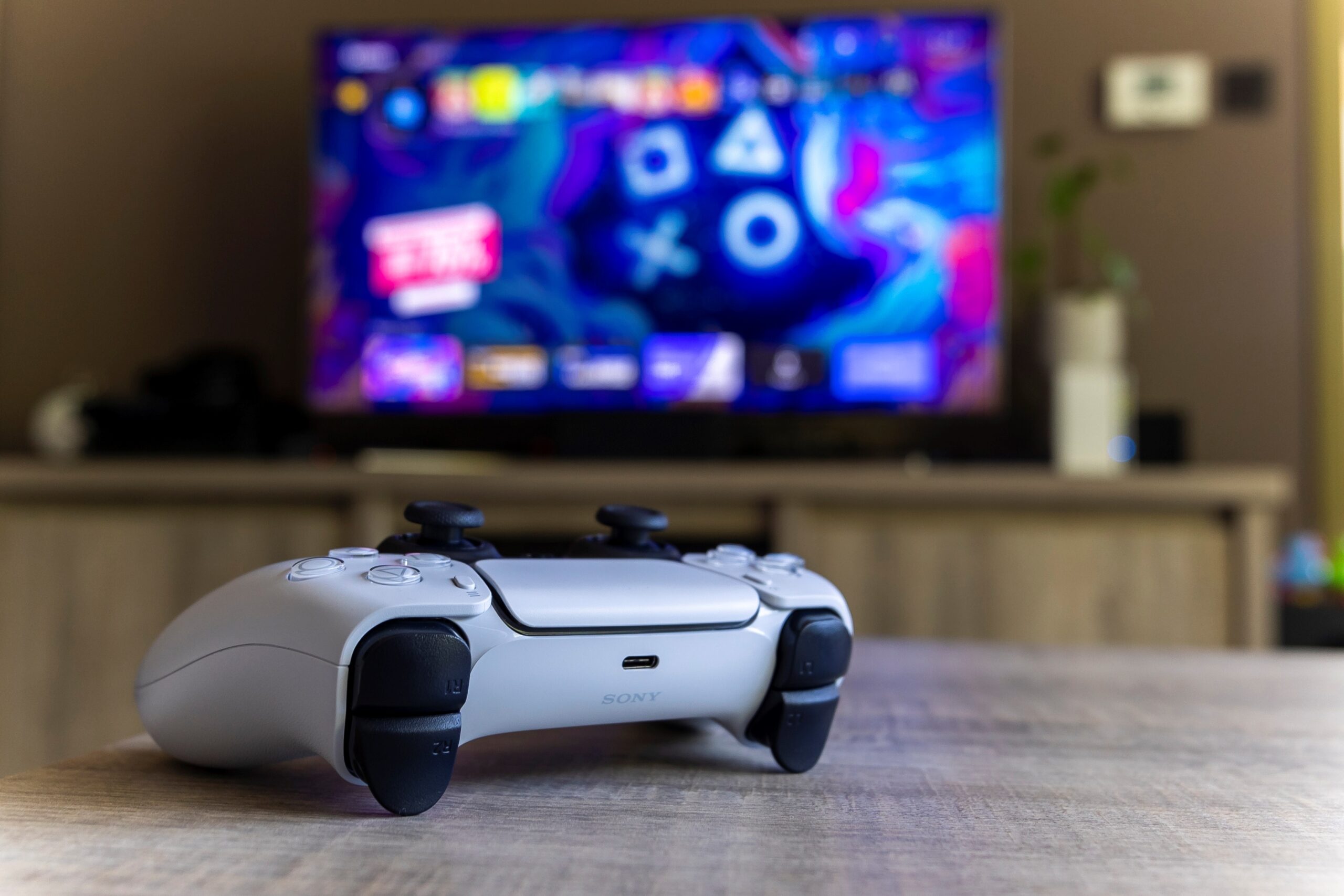
Software that facilitates employing unfair practices to secure an illegitimate victory in a video game, once again, made its way to the courts. On 31 July 2025, in a recent judgment (Case no. I ZR 157/21), the German Federal Court of Justice (‘BGH’) had to primarily determine whether cheat software that modifies the original execution of video game software, which is controlled by the underlying computer program, constituted copyright infringement. Section 69c No. 2 of Germany’s Act on Copyright and Related Rights (BGBI 1965) (‘German Copyright Act’), which implemented Article 4(1)(b) of the Software Directive 2009/24/EC (‘Software Directive’), enables rightholders to prevent alteration of a program. The blog explores this judgment and examines its wider implications.
Background
In 2012, Sony Computer Entertainment Europe Ltd (‘Sony’) claimed copyright infringement against Datel Design and Development Ltd and Datel Direct Ltd (together ‘Datel’) under Sec. 69c No. 2 of the German Copyright Act. It alleged, inter alia, that Datel’s cheat software – ‘Action Replay’ and ‘Tilt FX’– infringed their copyright in the video games, particularly the exclusive right of alteration (Article 4(1)(b) Software Directive). Sony claimed that the cheat tool enabled users of their video game console – PlayStation Portable (‘PSP’) – to remove the gameplay restrictions in the game, and therefore they should be held liable for such unlawful alteration. For example, players could circumvent the “Turbo” function to use it infinitely. Sony, however,agreed that neither the cheat software itself nor the users could obtain access to, or alter, the code of the game software. Instead, the cheat software modified game data temporarily stored in the random access memory (RAM) of the PSP. Datel counterargued that since copyright in programs is limited to the expression of the code under Sec. 69a No. 2, merely influencing the variables stored in the PSP’s RAM did not infringe copyright.
In 2023, the BGH made a referral to the Court of Justice of the European Union (‘CJEU’) with the following questions for a preliminary ruling: (i) whether a simultaneously running program with the copyrighted program that manipulated data (temporarily) stored in RAM, without altering the code of a software constituted interference with the scope of protection conferred by Article 1(1) to (3) of the Software Directive; and (ii) whether such an action infringed a rightholder’s exclusive right to prevent alteration of a computer program under Article 4(1)?
Decision
On 17 October 2024, in Case C – 159/23, the CJEU initially recalled its approach in Case C – 309/09, Bezpečnostní Softwarová Asociace that copyright protection under the Software Directive extends merely to the expression of the (source or object) code under Article 1(1) to (3), not to ideas or other elements of the program (such as a graphic user interface (GUI)). Consequently, the court found that merely changing content in the RAM without altering the code of a game did not infringe copyright under Article 4(1). Subsequently, the BGH adopted the CJEU’s preliminary ruling and held that manipulating data in the volatile memory does not fall within Sec. 69a No. 2 of the German Copyright Act and therefore did not infringe Sony’s copyright under Sec. 69c No. 2.
Commentary
In Case C – 355/12, Nintendo v PC Box, the CJEU noted that since video games are multimedia creations encompassing elements other than the code itself (for example, graphics, music, and narratives), they could also be eligible for protection under the Information Society Directive 2001/29 (‘InfoSoc Directive’). In Sony,the CJEU refused to determine whether the use of Datel’s cheat software infringed the exclusive rights in the InfoSoc Directive on procedural grounds. Notably, the Advocate General’s Opinion suggested that temporary reproduction of the games’ graphic elements would not have possibly constituted infringement under Article 2(a) of the InfoSoc Directive, as such reproduction would benefit from the exception under Article 5(1)(b). If using the cheat software breached the terms of the end-user license agreement (‘EULA’), it is questionable whether reproduction arising from manipulating content in the RAM could be considered ‘lawful use’.
In the UK, there have been two cases against providers of cheat software. In Blizzard Entertainment SAS v Bossland GmbH ([2019] EWHC 1665 (Ch)), the court could not analyse copyright infringement because the defendant admitted to the claims. Conversely, in Take-two Interactive Software Inc v James (‘Take-Two’) ([2020] EWHC 179 (Pat)), the supply of “Epsilon” cheat software was found as authorising the users to reproduce objects (for example, weapons), which were stored in the library files of “Grand Theft Auto V”, at unconventional positions, thereby constituting infringement (ss. 16(2) and 17(6) of the Copyright, Designs and Patents Act 1988). While neither “Action Replay” nor “Epsilon” allowed users to alter the computer program itself, the courts nevertheless reached divergent outcomes on the matter of infringement. This is because, in Take-Two, the claim was about the authorisation of reproduction of literary works other than the program itself. Consequently, unlike Sony, the infringement analysis was not exclusively grounded in special rules relating to software.
The decision in Sony could arguably allow developers of cheat software to circumvent copyright restrictions under the Software Directive, unless the cheat tool is considered to alter the code itself. Video game publishers may need to increasingly rely on anti-cheat systems and enforce the EULA to restrict the use of cheat codes.
Unlike Sony, Werbeblocker IV (Case no. I ZR 131/23) suggests that copyright may subsist in machine-generated code under Sec. 69a No. 2. Consequently, an ad-blocking software altering such code may nevertheless infringe copyright. This raises an unrelated question whether code produced by generative artificial intelligence could be protected by copyright. Unlike bytecode, which is an intermediate adaptation of the author’s source code, generative AI semi-autonomously produces the source code to implement an idea.
Conclusion
The decision in Sony does not conclusively exempt the use of cheat software from copyright infringement. Although it clarifies the scope of protection under the Software Directive. Video game publishers may need to rely on alternative legal avenues to protect their investments and integrity of the games.

Leave a Reply