
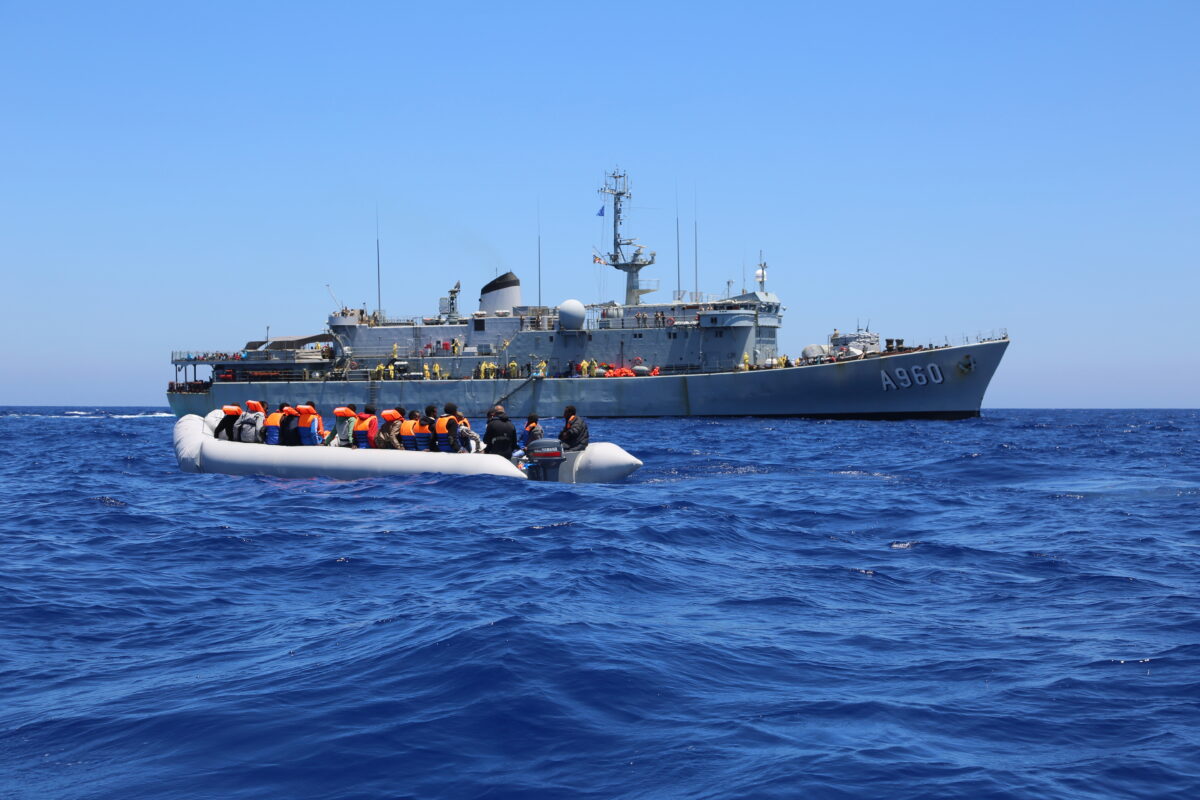
The pending appeal in WS and Others v Frontex presents one of the most significant challenges for the European Union’s external border governance regime in recent years. The case concerns whether the European Border and Coast Guard Agency (Frontex) can be held liable for its operational role in a 2016 joint return operation conducted with Greek authorities, in which asylum seekers were forcibly returned to Turkey in circumstances allegedly breaching the prohibition on collective expulsion under Article 19(1) of the Charter of Fundamental Rights of the European Union and Article 4 of Protocol 4 of the European Convention on Human Rights (ECHR). This case tests the scope of agency accountability under Article 340 of the Treaty of the Functioning of the European Union (TFEU), governing the non-contractual liability of EU institutions and agencies.
The Advocate General’s (AG) opinion recommends dismissal, relying on a distinction between decision making authority and operational participation. Yet this approach has attracted criticism for perpetuating a well-documented accountability gap in EU migration governance. The outcome of this case could be highly significant, exposing EU agencies to liability and operational due diligence obligations. The case might also carry significant precedential weight on the alignment of EU law with European Court of Human Rights (ECtHR) jurisprudence.
Operational agency liability
At the centre of the legal dispute is the question of whether operational participation in a joint return operation, where fundamental rights breaches were foreseeable and arguably acknowledged, can ground liability under Article 340 TFEU. The General Court dismissed the claim on the basis that Frontex lacked the authority to make return decisions and that its operational acts were not the direct cause of the harm suffered.
The AG endorsed this reasoning, emphasising the distinction between legal decision making and operational support functions. This narrow attribution model has been criticised for ignoring the de facto operational authority exercised by agencies like Frontex during joint operations with it being argued that such formalism obscures the reality that operational acts can materially contribute to rights violations in multi-actor enforcement settings. Furthermore, the ECtHR’s landmark ruling in Hirsi Jamaa and Others v Italy established that operational control and knowledge of risk can suffice to trigger liability under the ECHR irrespective of formal jurisdictional divisions.
Recognising operational liability for Frontex would modernise Article 340 TFEU doctrine and bring the EU’s approach into line with this established principle of European human rights law. It would also mirror domestic public law trends similar to the UK where the Supreme Court in R (AAA and others) v SSHD confirmed that operational cooperation with third countries cannot immunise public authorities from responsibility for foreseeable fundamental rights risks.

© European Union, 2025, CC BY 4.0
Impact on legislative framework
A finding of liability against Frontex potentially has immediate consequences for Regulation (EU) 2019/1896 and its subsequent interpretation and application. Article 46, which empowers the Executive Director of Frontex to suspend or terminate operations if serious fundamental rights breaches are identified, is central to this matter as its invocation would almost admit liability for joint-returns operations. The AG’s opinion downplays the legal force of Article 46 as instead of a source of enforceable obligations they interpret it as an automated provision. However, as Ferstman argues, operational actors in rights-sensitive contexts increasingly bear legal due diligence duties to actively assess and mitigate foreseeable rights risks in cross-border enforcement operations.
Should the CJEU accept the applicants’ reasoning, it would affirm Article 46 as a binding operational due diligence standard, requiring Frontex to suspend participation in operations where fundamental rights breaches are evident or foreseeable. This would likely necessitate revisions to both Frontex’s internal operational protocols, and the procedural safeguards, applied by Member States participating in joint operational human rights obligations in future EU agency mandates in areas such as police cooperation, cybersecurity, and external border security, areas where de facto operational control increasingly intersects with fundamental rights risks.
Fundamental rights risks and legal precedent
Aside from the institutional and legislative effects, the case provides wider implications for the enforceability of fundamental rights protections in operations within the EU. If the CJEU diverges from the AG’s opinion (allowing the appeal) it will strengthen the practical effectiveness of Articles 19 and 47 of the Charter, subsequently reinforcing the principle that EU agencies engaged in operational acts do shoulder some legal responsibility for upholding/ protecting fundamental rights. It would also bring CJEU doctrine into alignment with the ECtHR’s operational control jurisprudence, closing gaps in the enforceability of fundamental rights obligations with joint enforcement actions.
As Costello and Mann argue, fragmented accountability structures in externalised migration governance have enabled states and agencies to evade responsibility by exploiting jurisdictional technicalities. A ruling in favour of the claimants WS and others would disrupt this pattern and affirm that operational complicity in rights breaches triggers legal responsibility, irrespective of the formal decision-making authority. In line with this, cases such as EM (Lebanon) v SSHD and AAA have confirmed domestically that foreseeable rights risks arising from joint operational participation with third countries does engage liability and by extending this reasoning to EU agencies, the CJEU would not only harmonise European constitutional human rights protections but also pressure both EU procedural safeguards, and supervisory mechanisms in externalised migration enforcement operations.
Conclusion
The pending judgement in WS and others may serve as a turning point for EU public law, operational agency liability, and the enforceability of fundamental rights at Europe’s external borders. The AG’s formal approach does risk perpetuating accountability gaps and could undermine the constitutional authority of the Charter in operational contexts. Contrastingly, a substantive ruling recognising operational liability under Article 340 TFEU and enforcing Article 46 of the Frontex regulation would bring CJEU jurisprudence into coherence with ECtHR practice and push for legislative reforms to embed enforceable operational due diligence obligations in EU border governance. Such a ruling would not merely resolve an institutional dispute but would mark a broader constitutional affirmation that fundamental rights are legally binding in the operational reality of EU governance, a principle of growing significance in a legal order increasingly characterised by transnational operational partnerships, border externalisation, and multi-actor enforcement models.
Leave a Reply