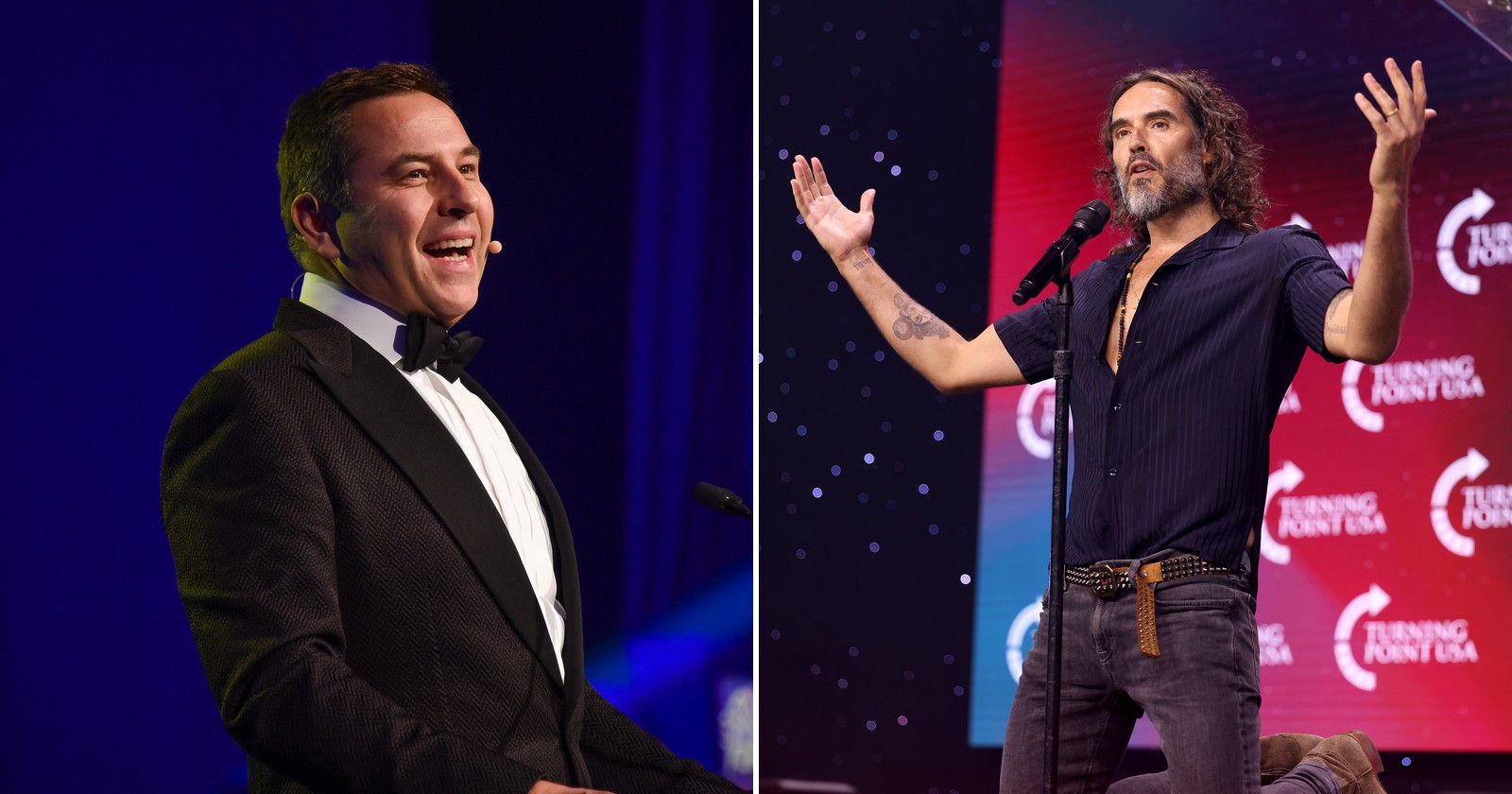

Two recent events have highlighted the dilemma of providing justice to those who allege that they have been subject to sexual abuse. First, the conviction on charges of rape and other sexual offences has shown that celebrity figures are subject to the normal criminal law, with Brand receiving a sentence of over ten years’ imprisonment. That case also raised the issue of media coverage of allegations of sexual misconduct, with Brand suggesting that he had become a victim of media tactics to ruin his reputation and interfere with the legal process. Second, another high-profile celebrity figure, David Walliams, has now been identified as the person involved in multiple allegations of inappropriate sexual conduct, having received a temporary order from the courts that he should not be identified pending his appeal on anonymity to the Court of Appeal (PPT v Independent Television News Ltd [2026] EWHC 2818 (KB).
Both cases raise important issues about fair trials, justice for victims of alleged sexual abuse, and the right of the press to report on such allegations; as well as the ‘right’ of the public to access such information. This piece will focus on the PPT decision, below, a decision which has lost some of its practical impact now that Walliams has been identified, but the case still raises important issues about the balance between freedom of expression and press freedom, and the protection of an individual’s human rights.
The case of PPT
The facts and decision in PPT
In PPT v Independent Television News Ltd. [2026] EWHC 2818 (KB), the High Court held that a well-known public figure, investigated by the press for allegations of sexual misconduct against several women, was not, on balance, entitled to a court order granting him public anonymity. The Court rejected his claim, see below, but maintained his anonymity until he has time to appeal the decision to the Court of Appeal. However, because the injunction’s jurisdiction was restricted, independent journalists and commentators based outside of England and Wales named him on social media platforms causing his identity to circulate globally online.
An unnamed celebrity attempted to block publication by the defendant press and broadcasters of serious allegations of exploitative sexual behaviour made by several women. This included alleged abuse of his power and status as a well-known public figure to establish contact with young women who were considerably younger than him, and engage in inappropriate sexual activity, including potential criminal activity. PPT sought a permanent injunction arguing that publication of the allegations (which he denies) would cause a deterioration in his mental health, including serious attempts to take his own life and the need for psychiatric treatment. He thus argued that publication would expose him to a real and immediate risk of serious harm or death, contrary to Articles 2 and 3 ECHR, as well as a breach of his right to private and family life.
The Court held that although a decision permitting publication, along with the anticipation of publication and publication itself would materially increase the claimant’s risk of suicide, the proposed publications were not the sole cause of the claimant’s psychiatric condition or suicidality or the only source of his present distress. Thus, although the prospect of publication was a specific and powerful anticipated trigger, and an injunction would remove that particular trigger for so long as the restraint remained effective, it would not treat the underlying psychiatric condition or remove the claimant’s elevated baseline risk or prevent deterioration arising from other significant stressors. The state has assumed responsibility for the celebrity’s immediate safety through the psychiatric hospital and mental-health services, and the court cannot assume responsibility for the claimant’s psychiatric treatment or safety for the purpose of Articles 2 and 3.
The Court also dismissed the claim under Article 8 – the right to private and family life – as the injunction would constitute an exceptionally serious interference with the rights engaged on the other side – open justice and freedom of expression. Article 8 does not require a court to eliminate every source of psychiatric distress by imposing a prior restraint upon the lawful activities of private parties. It then rejected the Article 8 claim on two grounds. First, that publication would be the act of private media organisations, and Article 8 did not create a free-standing cause of action by which one private person could restrain another. Domestic causes of action existed to protect his Article 8 interests, but the claimant had chosen not to pursue them. The law did not give a free-standing jurisdiction to restrain public-interest journalism merely because its anticipated consequences would gravely interfere with the subject’s Convention rights. The claimant, thus, had not advanced any claim of breach of confidence, misuse of private information, harassment, defamation or any other recognised domestic cause of action against the defendants, and the court’s general equitable power did not fill that gap and provide a proper basis for granting the injunction sought.
Second, even if there was a basis of imposing liability for publication, on a direct proportionality assessment, Article 8 did not require the suppression of publication. The information was not alleged to be private, the journalism concerned matters of substantial public interest, and the defendants’ investigation had evidential foundation. Further, the claimant’s son’s independent interests lacked sufficient individualised evidence to be decisive. Nevertheless, the judge granted permission to appeal and ordered that the claimant’s anonymity remain until the outcome of that appeal, believing that there were compelling reasons for an appeal to be heard in order to determine important questions concerning the scope of positive obligations under Article 2 and 3. That finding, of course, has now been rendered redundant by the subsequent disclosure of his identity outside the jurisdiction (see above).
Protecting the private and other rights of celebrities
The decision and the whole event raise a number of issues regarding the battle between celebrity privacy and press freedom, an area well documented in a long line of judicial decisions, both in domestic law and from the European Court of Human Rights. It also raises more practical problems, of enforcing anonymity and privacy rights in the modern technological age, where the public can acquire information from various sources, including, in this case, from press officials not covered by the court’s orders.
The law attempts to draw a balance between open justice in legal proceedings and freedom of expression (under Articles 6 and 10 of the European Convention), and the right to private and family life (under Article 8), and, as claimed in this case, the right to life and physical and mental integrity (protected by Articles 2 and 3).
The rights contained in the European Convention on Human Rights are given further effect by the Human Rights Act 1998, section 6 of which imposes a duty on public authorities not to (unjustifiably) violate such rights. Although the press are not a public authority for the purpose of the Act, and actions in privacy (misuse of private information) are private law actions between private entities, the courts are regarded as public authorities under the 1998 Act and must therefore apply Convention rights and principles in line with relevant Convention rights, and following relevant case law from the European Court of Human Rights (section 2 of the HRA 1998).
Consequently, in private actions for defamation and misuse of private information, the domestic courts have imposed a duty on the press, and other defendants, not to disproportionately interfere with a claimant’s Article 8 rights (Campbell v MGN Ltd [2004] UKHL 22, [2004] 2 AC 457). That obligation must, of course, be balanced with the right of freedom of expression, and the public interest in free speech attached to press freedom. That balance was clearly in play in the present case, but in addition the claimant argued that failure to grant him anonymity would risk his right to life (Article 2) and subject him to inhuman and degrading treatment (Article 3) as there was a real risk that placing his identity along with the allegations into the public domain would present a serious risk to his rights under Articles 2 and 3 – in other words, given his present mental state, there was a real risk that he would take his own life or self-harm.
Public authorities, such as hospitals and prisons, clearly owe duties towards patients and prisoners under Articles 2 and 3 with respect to suicide and self-harm threats, but, of course, they are public authorities under the 1998 Act. The question in this case, therefore, was whether that duty could be imposed on the press (a private entity) or the courts (a public authority) where there was a real risk of death or other physical or mental harm. The High Court in this case rejected the proposition that Articles 2, 3 and 8 could be used in this case – where the court was exercising its original jurisdiction to restrict reporting of the case; distinguishing it from previous cases where the claimant had used relevant legal remedies to engage those rights, above, or where there was an immediate threat of violence from the public towards the claimant if their identity was revealed (Venables v News Group Papers Ltd [2019] EWHC 494 (Fam)). On the present facts, therefore, the Court refused to extend the duties under Articles 2, 3 and 8 to the harm that revelation by the press of the claimant’s identity would cause to him; the Court noting that the claimant’s Convention rights were already being protected by the medical and psychiatric help he was already receiving from medical and other experts.
The Court of Appeal will be asked to consider the possible extension of the press’s and the courts’ duties under Articles 2, 3 and 8 in this respect, and whether the court’s refusal to prevent further harm and risk to the claimant by refusing anonymity should engage those further duties under the Human Rights Act. So too, the Court of Appeal will have to rule afresh on the question of whether the claimant’s relationship with his son would be seriously aggravated by public disclosure.
Granting anonymity in privacy cases
Because of the nature of celebrity, and the risk that their public profile will be more seriously damaged by revelations and allegations of misconduct, legal actions in privacy are often combined with claims for interim relief; either preventing publication or further publication before a full trial, or asking the court for an anonymity order, forbidding the defendant and others from disclosing the identity of the claimant, and attempting to secure a closed trial of the claim.
In such cases, the courts prefer, as the High Court did in the present case, to enforce the principles of open justice, subject to necessary exceptions, but the courts do have the power to order anonymity in cases of misuse of private information cases. This includes the power to award super injunctions, where (the press) would be barred from disclosing the identity of the claimant, along with the fact that this (unnamed) person is seeking legal relief, where such disclosure would assist in revealing the identity of the claimant. Several such claims for anonymity were granted in the 2010s. Footballers John Terry (Terry v Persons Unknown [2010] EWHC 119 (QB)) and Ryan Giggs (CTB v News Group Newspapers Ltd [2011] EWHC 1232 (QB)) sought anonymity; and the former Prime Minister Boris Johnson was refused such an order regarding his sexual infidelity. Super injunctions are less common these days, but the High Court seriously considered granting a general order of anonymity in the present case.
It should also be noted that the courts may grant an anonymity order against the press, even where the relevant private information has partially entered the public domain, for example on social media (PJS v News Group Newspapers Ltd [2016] UKSC 26). This is to prevent the claimant from further and more intense stress and public interrogation caused by press disclosures. Had the claimant in the present case used the law of confidentiality or misuse of private information to safeguard his rights, he may well have received such an order. On the other hand, the law is powerless to deal with cases where such allegations and identities are disclosed in Parliament, where Article 9 of the Bill of Rights provides absolute immunity to the speaker in such cases, and the European Court of Human Rights has held that such immunity strikes an appropriate balance between private life and freedom of political debate (Green v United Kingdom (2025) 81 EHRR 9).
Had the appeal proceeded the Court of Appeal would also have had the opportunity to clarify the importance of the public interest in disclosure in such cases: whether such disclosure is inevitably in the public interest, whether, the presumption against disclosure of pending police investigations before charge is an unnecessary intrusion into private life? (see Bloomberg LP v ZXC [2022] UKSC 5), and whether it is necessary for a claimant to bring privacy claims to enforce his Convention rights.
Conclusions
The decision of the Court of Appeal in this case will not now take place, but other decisions will be eagerly awaited by the press, legal academics and the public. Whether the privacy and other rights of the claimant override the rights to free speech and open justice depends on the strength of each claim on the particular facts, with neither right having a predominant standing. Thus, any interference with open justice and freedom of speech must be necessary and proportionate, given the strength of the claimant’s privacy and other claims. A future Court of Appeal ruling in this case will provide some valuable guidance to the courts in balancing those rights and laying down the parameters of both privacy claims brought by public figures and the public interest in maintaining open justice and freedom of expression. Appeal courts will be asked to clarify both the extent to which the domestic courts must safeguard the individual’s right to life where it is threatened by public disclosure of allegations of sexual misbehaviour, and whether public knowledge of the celebrity’s identity in such cases is truly in the public interest, or simply of interest to the public. All these issues are, of course, academic when the identity has been revealed by other means – in such a case the claimant must bow to social reality and is left without an effective remedy.