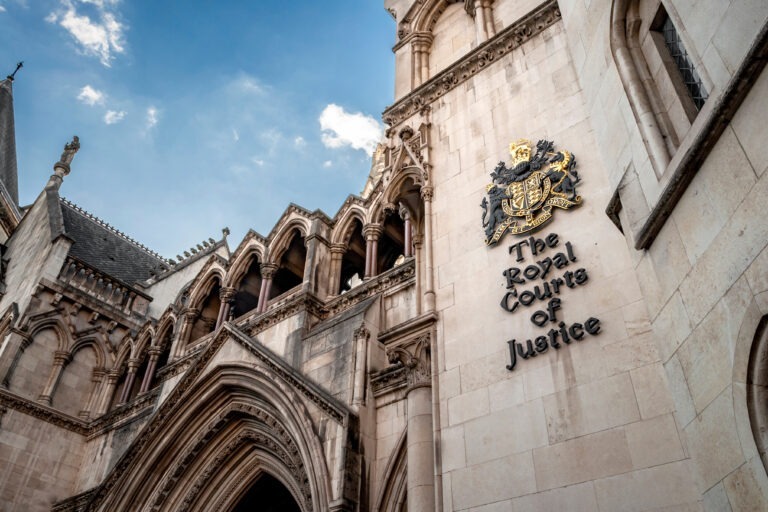


James Bond fans should be grateful for the Equality Act 2010. In Ian Fleming’s Moonraker, 00 agents have a mandatory retirement age of 45. Were we still in 1955, that would make the casting of Robert Pattinson at the age of 40 somewhat tricky. With his first film not expected until 2028, Pattinson would likely join George Lazenby as a ‘one and done’ Bond.
Fortunately, age is now a protected characteristic under section 5 of the Act, and retiring even a secret agent because he has turned 45 is direct discrimination under section 13. Age is the only protected characteristic for which the Act expressly allows direct discrimination to be justified, if the employer shows a proportionate means of achieving a legitimate aim (s 13(2)). Since the default retirement age was abolished in 2011, any compulsory retirement has to meet that proportionality requirement (Seldon v Clarkson Wright and Jakes [2012] UKSC 16). The Court of Appeal has since recognised other forms of direct discrimination can be justified by proportionality (Higgs v Farmor’s School [2025] EWCA Civ 109).
Of course, His Majesty’s Secret Service might attempt to justify such compulsory retirement. The Court of Justice of the EU permitted the City of Frankfurt to refuse to recruit firefighters over 30 because of the physical demands of the job (Case C-229/08 Wolf v Stadt Frankfurt am Main EU:C:2010:3), while section 192 of the 2010 Act contains a national security exception. However, the CJEU did not accept that Lufthansa pilots were inherently incapable of performing to an acceptable standard beyond the age of 60 (Case C-447/09 Prigge v Deutsche Lufthansa AG EU:C:2011:573), and it is unlikely that a court would tolerate compulsory retirement at 45 without an assessment of the individual’s performance. So the good news for fans is that Pattinson can, if he wishes, aim to beat Roger Moore’s record, who was 57 when he completed his final film A View to a Kill.
This blog article takes an abstract look at the public law basis for what would otherwise be Bond’s extra-legal conduct. Of course, it is not possible to go into every ridiculous act over 14 books and 25 films. The films’ interaction with road traffic laws could fill a textbook by themselves!
Legal basis
Retirement was the least of the legal issues when we first met James Bond in the 1950s. The Secret Intelligence Service was established in 1909 without any statutory basis. Instead, the Service operated under the royal prerogative, and until 1992 the government would not confirm that it existed at all.
Until fairly recently, courts did not generally scrutinise matters relating to national security. In Council of Civil Service Unions v Minister for the Civil Service [1985] AC 374 (HL) – a landmark case in UK constitutional law – the House of Lords held that although prerogative powers can be judicially reviewed, national security was, by its nature, unsuited to review by the courts.
Around the same time, the European Court of Human Rights considered the compatibility of state surveillance with the European Convention on Human Rights. In Malone v United Kingdom (1985) 7 EHRR 14 the Court held that telephone tapping by the police breached Article 8 because it was not ‘in accordance with the law’.
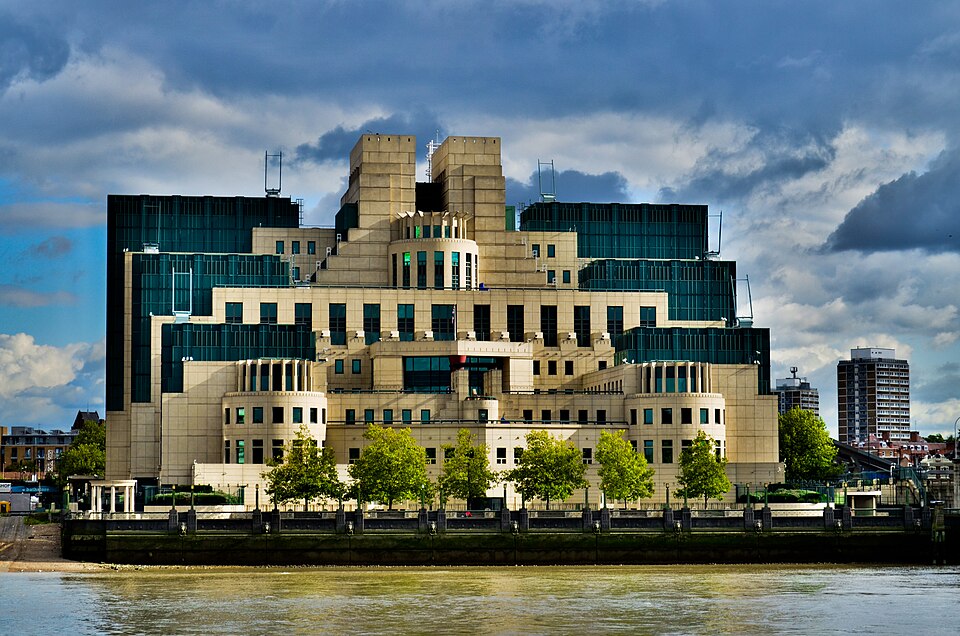
The consequence of Malone was a series of Acts of Parliament intended to place what had previously taken place in the legal shadows on a statutory footing. The Interception of Communications Act 1985 directly followed Malone (since repealed by the Regulation of Investigatory Powers Act 2000). The Security Service Act 1989 provides the legal basis for MI5, and the Intelligence Services Act 1994 does the same for James Bond’s agency MI6. The 1994 Act sets out the functions of the Secret Intelligence Service directed by a Chief (the real world ‘M’) who is appointed by and reports to the Foreign Secretary. There is now also a parliamentary committee, a judicial commissioner, and a tribunal to hear complaints. Not only is this a long way from the loose arrangements for the ‘M’ of the Fleming books, it is a more conventional framework than the bizarre constitutional arrangement depicted in Skyfall.
Licence to Kill
In both the novel and the film adaptation of Casino Royale we learn that a double-O number means an agent has killed someone in cold blood on an assignment, and brings with it the famous ‘Licence to Kill’.
Of course, no such licence has ever existed. The nearest thing in the real world is the appropriately numbered section 7 of the 1994 Act, which states:
(1) If, apart from this section, a person would be liable in the United Kingdom for any act done outside the British Islands, he shall not be so liable if the act is one which is authorised to be done by virtue of an authorisation given by the Secretary of State under this section.
(2) In subsection (1) above “liable in the United Kingdom” means liable under the criminal or civil law of any part of the United Kingdom.
The authorisation is granted by the Foreign Secretary. It has to be necessary for the proper discharge of the functions of the Service, and authorisation expires after six months unless renewed.
Section 7 only deals with criminal and tortious liability within the UK. Unlike many intelligence agents who act under the cover of diplomatic service, Bond is an ‘illegal’, posing as a salesman for Universal Export and therefore lacking diplomatic immunity. Bond is also subject to the Human Rights Act 1998. In Al-Skeini v United Kingdom (2011) 53 EHRR 18, the Strasbourg Court held that state agents are, in some circumstances, bound by the ECHR anywhere in the world. In Carter v Russia App no 20914/07 (ECtHR, 21 September 2021) the Court found that Russia had violated Article 2 by poisoning Alexander Litvinenko in London.
Article 2 is not absolute, however. Under Article 2(2), a death does not breach the Convention where it results from force that is ‘no more than absolutely necessary’, including in defence of any person from unlawful violence. While Bond shooting a henchman who is about to shoot him might, therefore, be justified; a cold-blooded killing of the kind that earns a 00 number would not. In McCann v United Kingdom (1996) 21 EHRR 97 (GC), the Court held that the killing of three IRA members in Gibraltar by SAS soldiers breached Article 2 because the operation had not been planned and controlled so as to minimise the use of lethal force.

Liability in the UK
While James Bond novels and films are notorious for their exotic settings, some of the action takes place closer to home. Most of the original Moonraker novel takes place in the glamorous county of Kent, while much of Skyfall takes place in the UK, most notably its climax in Bond’s family home in Glen Coe in the Scottish Highlands. Section 7 of the 1994 Act only applies to acts outside the British Islands. Activities within the UK are principally provided for by the Covert Human Intelligence Sources (Criminal Conduct) Act 2021, which empowers intelligence services to authorise crimes by their undercover sources. The Act was passed during the litigation in Privacy International v Secretary of State for Foreign and Commonwealth Affairs [2021] EWCA Civ 330, in which MI5’s previously secret policy on agents taking part in crime was upheld by the Court of Appeal eight days after Royal Assent.
The 2021 Act does not list any offences which cannot be authorised, and attempts to write murder and torture into the Bill as exclusions were resisted. At the time, Conservative Ministers said the Human Rights Act already rules out such actions. Given that the Conservative Party now advocates leaving the ECHR and repealing the Human Rights Act, it may be that the licence to kill abroad eventually extends to activities in the UK as well.
Conclusion
While the Bond of the 1950s worked in the shadows, today the intelligence services operate on a statutory footing. James Bond’s Licence to Kill is more likely a ministerial authorisation under section 7 of the Intelligence Services Act 1994 – which sounds decidedly less snappy. Furthermore, secret agents of today find themselves bound by the Human Rights Act wherever they are in the world. Robert Pattinson might, therefore, enjoy a long and successful career as 007, but he doesn’t have the legal carte blanche enjoyed by Sean Connery or Roger Moore.