
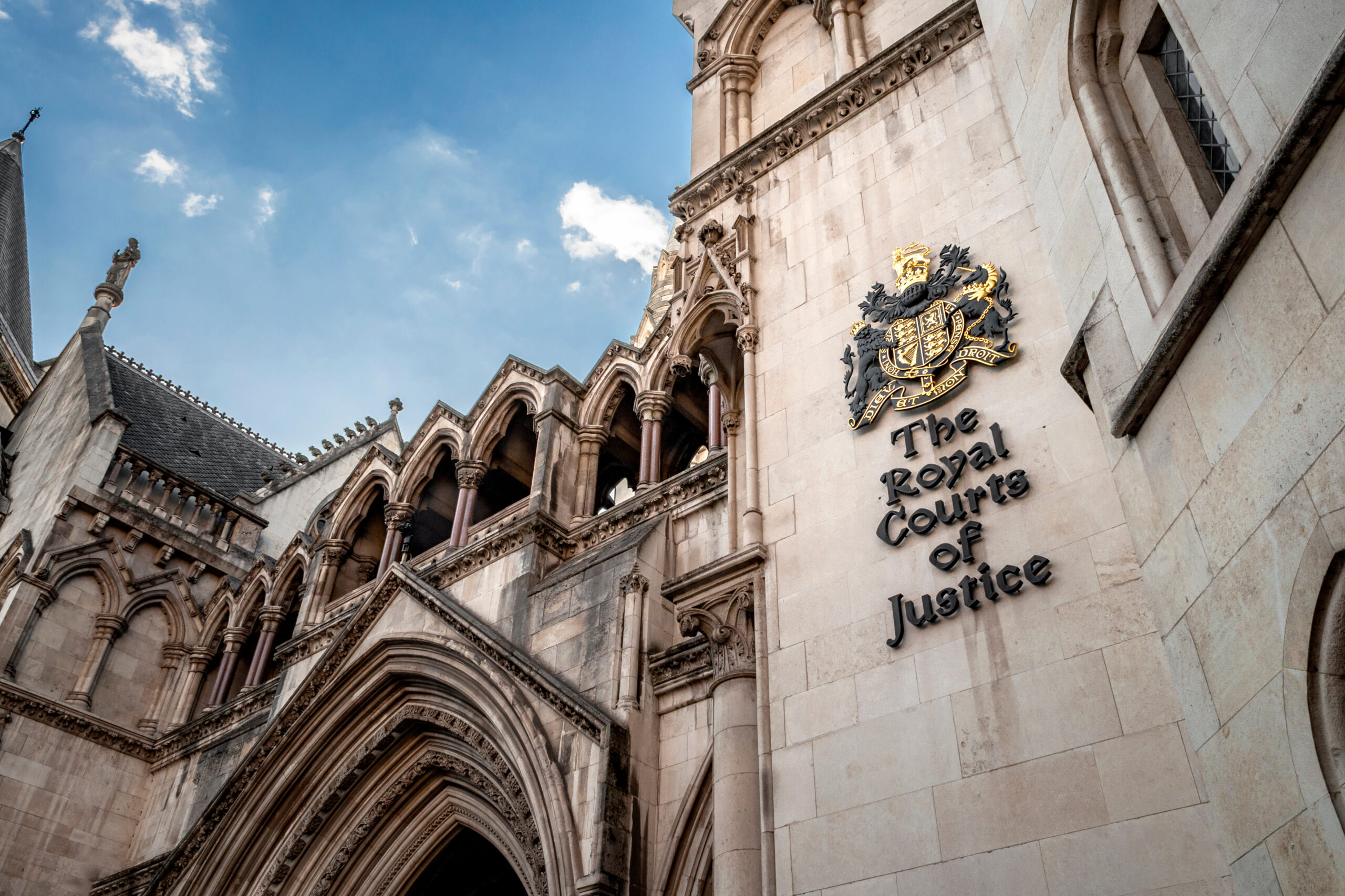
In Baroness Lawrence and others v Associated Newspapers [2026] EWHC 1637 (KB), the High Court dismissed an action brought in the tort of misuse of private information by Baroness Lawrence and other public figures (including the Duchess of Sussex and Sir Elton John) against Associated Newspapers (Daily Mail and Mail on Sunday). The basis of the case was that the newspapers and staff at Associated Newspapers had used unlawful means to acquire information relating to the private lives and activities of the claimants, such as the unlawful tapping of their telephones and other messages, and various acts of deception.
Associated Newspapers denied these allegations, claiming that they had acquired the relevant private information by using legitimate press sources and techniques, and the question for the High Court was whether the claimants had satisfied the civil burden of proof – that on the balance of probabilities their claims were true. In the judgment, the judge reiterated that the claimants could not rely on suspicion, even understandable suspicion, and they had to prove information had been obtained unlawfully. Associated Newspapers heralded the judgment as a victory for press freedom in general, and specifically for its reputation and integrity in employing lawful and ethical investigative methods.
The question now is where this decision leaves us in terms of the persistent battle between press freedom (and the public ‘right to know’) and the defence of privacy rights (particularly of public figures and celebrities, who are susceptible to press intrusion)?
Why were these actions and the decision so important to press freedom and privacy?
This latest legal action was part of a long-standing legal battle against the ‘popular’ press by certain public figures (including the Duke of Sussex), who sought not only individual redress and justice for breaches of their own privacy, but also sought to expose unlawful and immoral tactics employed by certain parts of the press. Unlike most privacy (misuse of information) cases, the main aim of the action is not to obtain injunctive relief or damages against the press, but to expose wider illegal and immoral conduct and thus fuel wider debate on press ethics (and to possibly encourage criminal actions against the press and its employees. Hence, following allegations of persistent and important violations of privacy by unlawful press tactics several years ago, the Leveson Inquiry examined the role of the press with respect to privacy protection, making various recommendations to improve press standards and accountability; and as a consequence, several members of the press felt the force of the criminal law, including imprisonment.
The context of this latest case is important to understand as the main aim in bringing this action was to expose illegality and encourage further legal reforms in this area. That said, the award of compensation for such breaches, including various out of court settlements to claimants, has provided justice to those individuals. Having defended the action successfully, Associated Newspapers, and the press in general, have gained the upper hand in this persistent battle on press ethics, at least for the time being, and obviates the need to provide hefty out of court settlements (in practice exceeding what a court may grant if the action is successful) to the claimants in this case.
But how much does it tell us as human rights’ lawyers, about how the courts balance press freedom with individual privacy, especially when the claimants are public figures, or at least well known?
The battle between press freedom and the protection of privacy
This action was based on the question of whether the press had obtained personal information about the claimants by adopting unlawful tactics, and the decision was that the claimants had failed to prove – on the balance of probabilities – that that was the case. Thus, the court was not directly requested to rule on whether that personal information (however it was obtained) was sufficiently private (did the claimants have a reasonable expectation of privacy in that information?), or whether there was a public interest in publishing that private information. However, as we shall see, such was the nature of the personal and family information gained by the defendants, that there was little doubt that the claimants’ privacy rights overrode any free speech or public interest rights of the claimants.
Most privacy cases are determined by this two-stage approach, and since the passing of the Human Rights Act 1998, the courts have developed a domestic law of privacy (misuse of private information) together with a defence of public interest, in order to balance the respective rights of private life and freedom of expression, as contained in Articles 8 and 10 of the European Convention on Human Rights (Campbell v MGN). The domestic courts have also developed a reasonably coherent body of case law in this area, providing guidance on how that balance should be achieved in practice. Thus, following the case law of the European Court of Human Rights in this area (Von Hannover v Germany), the domestic courts have established some underpinning rules:
- That the claimant’s expectation of privacy is not extinguished simply because s(he) is a public figure, although that expectation might be reduced in appropriate circumstances (for example, if they are politicians (and the publication refers to their public duties or standing, or if they have courted publicity).
- That there is a difference between a matter of public interest and what the public might be interested in – to employ the public interest defence, the defendant would have to prove that the information served some social, political or constitutional purpose (including the disclosure of illegal or immoral behaviour.
- That neither Articles 8 nor 10 have a stronger status than the other right, and the court’s duty is to assess whether any interference with privacy is, in the circumstances, proportionate to the public interest in publishing that information
The information gathered by the defendants in this case clearly favoured the privacy rights of the claimants over any free speech rights – there was a clear expectation of privacy of all claimants in respect of information regarding their personal and family relationships, and clearly no sustainable public interest in revealing that information, despite sections of the public being very interested in reading that information. However, what was at stake in this case went far beyond the recognition and protection of the claimants’ privacy rights. This, and the related actions brought by the Duke of Sussex were intended to tackle the abuse of press freedom head on; to send a warning to the popular press that their tactics are both – illegal and immoral, and that they should face the wrath of the law and of further legal reform. The decision appears to place us back where we started – and the war of attrition between public figures and the press will continue to be fought in an unchanged legal environment, where the individual circumstances of each disclosure will secure either success or defeat.
Conclusions
The advantage of the process perused by the claimants in this case is that instead of relying on individual redress for privacy invasion (court awards can be quite low and injunctions are often not feasible and effective as the information has already leaked into the public domain), a successful allegation of illegality can lead to extensive out of court settlements and possible changes to the law. Success in these cases can also change the attitude of the public towards press freedom, possible influencing future press behaviour.
However, failure to prove these allegations and succeed in the legal action (and indeed bringing legal actions in the first place) can have the opposite effect. One is that the private information is digested by people who were previously unaware of the secret – what is known as the Streisand effect. Further, when one loses the legal action, not only does one have to pay the defendants’ legal fees, but the defendant press is able to praise themselves for their integrity and constitutional and democratic values – not just in this case, but in general.
The legal fees in this case are expected to be in the region of £50 million pounds. Most defendants were insured against losing the action, and it is understood that Baroness Lawrence will not be made to pay any further expenses. So, this was a good day for some – media lawyers! The claimants in this case were adamant that they were going to show the popular press a (further) lesson and protect individuals from invidious press behaviour. But they and the lawyers appeared to have forgotten the rule that one has to prove such allegations, and that the courts will not assume that your allegations are true. Presumably the claimants (and their lawyers?) thought that the risk of not proving the allegations was worth the potential of proving them true and succeeding in the action. As it turns out, the claimants (and the lawyers?) appear to have egg of their faces.

Leave a Reply